Questions, questions

If I want oil that has no taste, I'll just use canola. If I get olive oil, I want it to taste like olives. And the more olive-r, the better.

Currently, I'm using Frantoia for dipping purposes, which runs about $35 for a bottle. For cooking/frying, I use something a little cheaper like Pompeian because the taste would be muted anyway by the food ingredients.

There's an olive oil and gourmet vinegar store in a mall near me that I'm dying to go visit. They have small bottles so I could try several and see which I like best.
 
Pressure cookers can be used for canning and for making food very well done and tender. I have never used ours.
The question I have is What the Hey?! does anyone need these for?
 
What is the best virgin olive oil to buy?
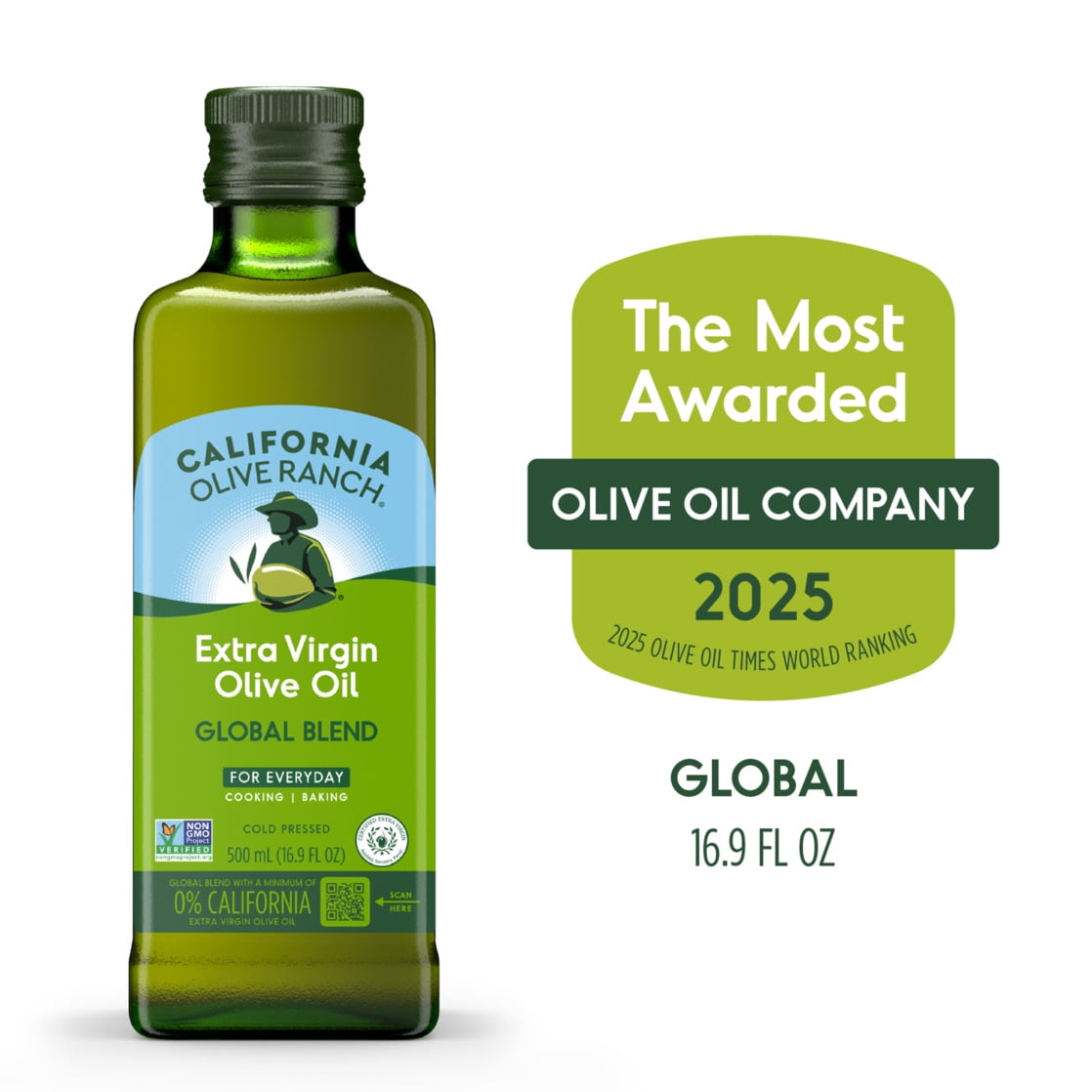
I've used this one extensively. America's Test Kitchen rated it highly several years ago, and it's moderately priced:

California-Olive-Ranch-Global-Blend-Extra-Virgin-Olive-Oil-16-9-fl-oz_4a11bb6b-919a-4719-b5c2-ab9327651f99.a17061592f0497f9ccbe31ba88b63187.jpeg


Since ALDI opened nearby, I've bought whatever they have on hand. I use it for cooking. I've tried making my own salad dressings but have yet to hit on anything I like as much as a bottle of generic vinaigrette.
 
I've used this one extensively. America's Test Kitchen rated it highly several years ago, and it's moderately priced:

California-Olive-Ranch-Global-Blend-Extra-Virgin-Olive-Oil-16-9-fl-oz_4a11bb6b-919a-4719-b5c2-ab9327651f99.a17061592f0497f9ccbe31ba88b63187.jpeg


Since ALDI opened nearby, I've bought whatever they have on hand. I use it for cooking. I've tried making my own salad dressings but have yet to hit on anything I like as much as a bottle of generic vinaigrette.

I don't usually cook with olive oil, unless it is low heat and short period.
I mostly use peanut oil for what frying or sautéing we do.
I do have a few bottles mostly bought for taking a spoonful for cleansing my system, liver and kidneys.
I hear peanut oil tolerates high heat better than most oils.
 
I don't usually cook with olive oil, unless it is low heat and short period.
I mostly use peanut oil for what frying or sautéing we do.
I do have a few bottles mostly bought for taking a spoonful for cleansing my system, liver and kidneys.
I hear peanut oil tolerates high heat netter than most oils.

You and others have given me so much information regarding olive oil and its use. I don't know anything about how to use it for cooking. Thank you for your input.
 
Last edited:
You and others have given me so much information regarding olive oil and its use. I don't know anything about how it use it for cooking. Thank you for your input.

Your welcome Von. I just read that using love oil for high cooking temps is not a good idea .


hen cooking oils are exposed to heat in the presence of air, they break down into toxic by-products called polar compounds that have been linked to the development of serious health problems including Alzheimer’s and Parkinson’s diseases. Some oils are more heat-stable than others, due to their chemical structures. In general, a limit of 24 to 27 percent of polar compounds in a frying oil is considered safe for human consumption, the Australian researchers noted. But they added that fried foods stored for a period of time before being consumed should have even lower levels.

The investigators tested the heat stability of 10 of the most com
 
Somehow the last part of the information you posted got cut off , @Marie Mallory . I went to the link you posted and it says that olive oil is the very safest one to use, and coconut oil (which is what I mostly use if we fry anything with oil) is the next best. Andrew Weil is a great source to use, and the one that Martin Alonzo always recommended in his posts here.
Here is the part that got cut off:
“The investigators tested the heat stability of 10 of the most commonly used cooking oils in Australia: extra-virgin olive oil, virgin olive oil, refined olive oil, canola, grapeseed, coconut, avocado, peanut, rice bran and sunflower oils. Results showed that extra-virgin olive oil was the safest and most stable when heated to temperatures even higher than those commonly used for sautéing, deep-frying and baking. It produced the lowest quantity of polar compounds compared to the other oils tested. The runner up was coconut oil.”

I use olive oil if I am sautéing, which is a lower heat, and we seldom fry anything except hamburger, which has its own grease. The tallow from beef fat is considered the very best thing for hot frying, and a lot of the restaurants are now going back to using tallow for making foods like French fries, which are cooked in deep fat and high heat.

We avoid all of the seed oils now, and just use either the olive oil, coconut oil, or an animal fat like tallow, lard, or butter, which are all supposed to be much healthier than any of the seed oils that have to be processed with high heat and chemicals and bleach to be usable.
 
Somehow the last part of the information you posted got cut off , @Marie Mallory . I went to the link you posted and it says that olive oil is the very safest one to use, and coconut oil (which is what I mostly use if we fry anything with oil) is the next best. Andrew Weil is a great source to use, and the one that Martin Alonzo always recommended in his posts here.
Here is the part that got cut off:
“The investigators tested the heat stability of 10 of the most commonly used cooking oils in Australia: extra-virgin olive oil, virgin olive oil, refined olive oil, canola, grapeseed, coconut, avocado, peanut, rice bran and sunflower oils. Results showed that extra-virgin olive oil was the safest and most stable when heated to temperatures even higher than those commonly used for sautéing, deep-frying and baking. It produced the lowest quantity of polar compounds compared to the other oils tested. The runner up was coconut oil.”

I use olive oil if I am sautéing, which is a lower heat, and we seldom fry anything except hamburger, which has its own grease. The tallow from beef fat is considered the very best thing for hot frying, and a lot of the restaurants are now going back to using tallow for making foods like French fries, which are cooked in deep fat and high heat.

We avoid all of the seed oils now, and just use either the olive oil, coconut oil, or an animal fat like tallow, lard, or butter, which are all supposed to be much healthier than any of the seed oils that have to be processed with high heat and chemicals and bleach to be usable.
I make my own ghee (it's easy to do), which has the highest smoke point of them all. I agree with avoiding the seed oils. I wish I knew where to buy tallow in non-commercial size packaging. I do keep lard in the fridge for some things (like refried beans.)

eta: For those rare occasions I make french fries, I use peanut oil.
 
Last edited:
I make my own ghee (it's easy to do), which has the highest smoke point of them all. I agree with avoiding the seed oils. I wish I knew where to buy tallow in non-commercial size packaging. I do keep lard in the fridge for some things (like refried beans.)
It is hard to find tallow now, and pretty expensive when you do find it. Back when the kids were growing up and we lived in Idaho, we went to the local butcher shop (where people took their cows and deer to be cut up), and I would pick up the huge garbage tubs of bones and fat and took it home for the dogs to chew on, and it was always free. The next trip into tow, we returned their trash barrel. Lots of people who had dogs that would eat the bones did this, and it saved the butcher shop from having to dispose of it, so it helped everyone.

I think we could render it the same as bacon fat, but I have not tried that. We put the bacon grease in hot water and then poured it through a strainer to remove particles, and the refrigerate it overnight. The next day, the lard and the water had separated, and you just poured off the water and kept the clean bacon grease for frying something else.
 
I make my own ghee (it's easy to do), which has the highest smoke point of them all. I agree with avoiding the seed oils. I wish I knew where to buy tallow in non-commercial size packaging. I do keep lard in the fridge for some things (like refried beans.)

eta: For those rare occasions I make french fries, I use peanut oil.

It is hard to find tallow now, and pretty expensive when you do find it. Back when the kids were growing up and we lived in Idaho, we went to the local butcher shop (where people took their cows and deer to be cut up), and I would pick up the huge garbage tubs of bones and fat and took it home for the dogs to chew on, and it was always free. The next trip into tow, we returned their trash barrel. Lots of people who had dogs that would eat the bones did this, and it saved the butcher shop from having to dispose of it, so it helped everyone.

I think we could render it the same as bacon fat, but I have not tried that. We put the bacon grease in hot water and then poured it through a strainer to remove particles, and the refrigerate it overnight. The next day, the lard and the water had separated, and you just poured off the water and kept the clean bacon grease for frying something else.
I just pour my bacon grease into a jar and keep it in the fridge. I've not thought of purifying it like that.
 
That is pretty much what we do, too, @John Brunner ; but if you need it to be pure, then that will do it. At one time I had a little set of salt and pepper shakers that looked like old time milk cans, and it came with a small bacon grease “bucket” with a filter that probably held 2 cups of bacon grease if it were full. It was great to have and made saving the bacon grease really easy.
We do not eat much bacon now, so we mostly give the grease to the dogs and cats over their food.
 
It doesn't seem logical to me that extra virgin olive oil is more stable at high temps than refine or light olive oil. The fats should be the same and the volatiles are the difference. Heating EVOO to high temps (over 350 F.) should remove many of the volatiles and leave the residue olive oil. I don't understand that Idea.

The saturated fats have always been deemed the most stabile since the molecule is most stable when heated. I have rendered my own lard and I suspect tallow is the same idea. Suet is even harder to find in the U.S. than tallow, but it can be found in the UK and other English-speaking countries. Suet is a special-purpose fat that melts at a high temperature. Frozen butter is often substituted for suet when suet cannot be found.
 
Don't forget that there is Refined (higher smoke point) and Unrefined (more flavorful) coconut oil.

From the internet:
Refined coconut oil is processed from dried coconut meat and undergoes additional steps like bleaching and deodorizing, resulting in a neutral flavor and higher smoke point (400-450°F).
Unrefined coconut oil, often called virgin, is made from fresh coconut meat and retains its natural flavor and nutrients, with a lower smoke point (around 350°F).

ALDI only carries Unrefined. Walmart carries both. Unrefined is more expensive, but it's tough to get a fix on on what the true per ounce price difference is because there aren't comparable sizes of each in the same brand. You can get Unrefined for 42¢/oz and Refined for 24¢/oz. But for as little as you're likely to use, the higher per-serving cost for Unrefined is negligible if you want coconut flavor and the nutritional benefit and aren't using it over a high heat.

In a similar vein, I buy Ceylon cinnamon [true cinnamon] that cost $7/bottle because it does not contain coumarin like the cheap stuff (Cassia cinnamon) does. Both provide similar health benefits, but "too much" coumarin definitely causes liver problems, likely causes kidney problems, might cause lung damage, and "some studies" say can increase cancer risk "in high amounts." Cassia cinnamon contains 10,000x the coumarin that Ceylon cinnamon does, but Cassia does have a stronger flavor. $7 is a lot for a bottle of cinnamon (pre-COVID it was only $4), but a bottle lasts maybe 4-6 months in my household since I use it as a supplement as well as for cooking, so I exclusively use Ceylon.
 
Last edited:
Don't forget that there is Refined (higher smoke point) and Unrefined (more flavorful) coconut oil.

From the internet:
Refined coconut oil is processed from dried coconut meat and undergoes additional steps like bleaching and deodorizing, resulting in a neutral flavor and higher smoke point (400-450°F).
Unrefined coconut oil, often called virgin, is made from fresh coconut meat and retains its natural flavor and nutrients, with a lower smoke point (around 350°F).

ALDI only carries Refined. Walmart carries both. Unrefined is more expensive, but it's tough to get a fix on on what the true per ounce price difference is because there aren't comparable sizes of each in the same brand. You can get Unrefined for 42¢/oz and Refined for 24¢/oz. But for as little as you're likely to use, the higher per-serving cost for Unrefined is negligible if you want coconut flavor and the nutritional benefit and aren't using it over a high heat.

In a similar vein, I buy Ceylon cinnamon [true cinnamon] that cost $7/bottle because it does not contain coumarin like the cheap stuff (Cassia cinnamon) does. Both provide similar health benefits, but "too much" coumarin definitely causes liver problems, likely causes kidney problems, might cause lung damage, and "some studies" say can increase cancer risk "in high amounts." Cassia cinnamon contains 10,000x the coumarin that Ceylon cinnamon does, but Cassia does have a stronger flavor. $7 is a lot for a bottle of cinnamon (pre-COVID it was only $4), but a bottle lasts maybe 4-6 months in my household since I use it as a supplement as well as for cooking, so I exclusively use Ceylon.
We use both refined and unrefined coconut oil. We use refined where the coconut taste would be inappropriate and unrefined for dishes where the taste is appropriate. Usually unrefined is used in our cooking unless it is something like a coconut shrimp or chicken, and in some stir fries.
 
I mostly use olive oil for stirfry and other savory foods. In baking I prefer a neutral oil like avocado. I very seldom deep fry anything any more, but I do keep a jug of vegetable oil for occasional french fries. When I make cornbread, I still slather the cast iron with a coating of Crisco. I really don't worry about stuff like that; I'm already old so it's not like a teaspoon of oil is going to be the end of me.
 
I mostly use olive oil for stirfry and other savory foods. In baking I prefer a neutral oil like avocado. I very seldom deep fry anything any more, but I do keep a jug of vegetable oil for occasional french fries. When I make cornbread, I still slather the cast iron with a coating of Crisco. I really don't worry about stuff like that; I'm already old so it's not like a teaspoon of oil is going to be the end of me.
That is the way I feel too @Beth Gallagher. You can only be afraid of so many things before it becomes obsessive. I don't deliberately endanger myself, but....
 
This is how they process rapeseeds to make Canola oil, but the process is abut the same for any other oil that comes from any kind of seed, like cottonseed, soybeans, corn, and other “vegetable oils”. I am not sure if this includes peanuts or not, but they are basically the seed of the peanut plant, so it probably includes that, too.

Fun fact: Canola stands for "Canadian Oil, Low Acid."
It's rapeseed oil.
Rapeseed oil was used as industrial lubricant in steam engines.
It contains erucic acid which causes heart lesions in animal studies.
In the 1970s, Canadian scientists bred a low-erucic acid version.
Named it "canola" because "low-erucic acid rapeseed oil" didn't market well.

The processing:
- Heat seeds to 95°C
- Press out partial oil
- Add hexane (petroleum solvent)
- Heat to remove hexane
- Refine, bleach, deodorize at extreme temperatures

Result: Oil that's 21% omega-6 polyunsaturated fat (highly unstable, oxidizes rapidly).
Marketed as: "Heart healthy alternative to saturated fat"
Reality: Industrial lubricant that was chemically modified and rebranded as food in the 1970s.
 
Back
Top