The Tractor Thread

What are you planting @Jake Smith ?


We started 60 seeds in peat pellets, strange how quick the bell pepper seeds, we had saved from red bell peppers that we grew, "years" ago. They came up in just about two days. Did some pintos, squash, iceberg lettuce, Beefsteak tomato's, Rutgers, sun flowers, red creole onions, radish's, and watermelons. Will do corn, sewn directly in one row for myself. Sure we will start a few other things, after second frost dangers. Always think of something you "want after the fact".


Now we wait.

DSCN2606.JPG
 
Last edited:
I love tractors and chainsaws. I don't have a tractor anymore and in the event I need a tractor, my neighbor has a Kubota with the backhoe attachment and front end loader, and another one he uses with leveling drags and other attachments. He also has a Kubota mini trackhoe. After I used them to finish a job he started in his back acreage, after he got hurt, he lets me use them whenever I need them. So far I have no need since I used them to move all the big rocks out of my backyard.

The only chainsaw I have is my electric Stihl and it cuts as fast as my former small gas Stihl. The secret to any chainsaw, especially professional electrics, is keeping the chain dressed with each battery charge. It is all I need around here these days. I sold my Husky 2100 after I left the mountain and wasn't falling big trees or sawing lumber using it on the Alaskan sawmill. I sold my Husky 266 with a 30" bar, when I no longer used firewood. It was my favorite all around saw, bar none. It was great for bumping knots with that bar. Even it was a bit much for me after I past 70.
 
Here is a tractor they used in the rolling wheat fields of Eastern Washington, back in the day. It is now by a brewery in Eastern Washington. Sad that it has to be defaced with that stay off sign. I was planning to have my picture taken on it, but I couldn't find where the STAY OFF only applied to kids. :mad:

25194653zyz8DKT2.jpg
 
Last edited:
I love tractors and chainsaws. I don't have a tractor anymore and in the event I need a tractor, my neighbor has a Kubota with the backhoe attachment and front end loader, and another one he uses with leveling drags and other attachments. He also has a Kubota mini trackhoe. After I used them to finish a job he started in his back acreage, after he got hurt, he lets me use them whenever I need them. So far I have no need since I used them to move all the big rocks out of my backyard.

The only chainsaw I have is my electric Stihl and it cuts as fast as my former small gas Stihl. The secret to any chainsaw, especially professional electrics, is keeping the chain dressed with each battery charge. It is all I need around here these days. I sold my Husky 2100 after I left the mountain and wasn't falling big trees or sawing lumber using it on the Alaskan sawmill. I sold my Husky 266 with a 30" bar, when I no longer used firewood. It was my favorite all around saw, bar none. It was great for bumping knots with that bar. Even it was a bit much for me after I past 70.


I can't imagine life without a tractor or chainsaws, they are so "handy", and make life "better". Stihl's are so expensive, I was pricing them after these Poulan Pros I have, kept giving me such problems, and couldn't believe how much they are. I bought another kind in price range I could afford, and so far though cheaper than the poulans, works great and "runs" fine, and it has a 20 inch bar on it. I do keep chains dressed with bar chainsaw oil, tightened right, and clean.

I have an old electric chain saw, bought in 1998, used to work great. Hanging in the barn wall, got to check it back out and put a new chain on it. Kubota is a fine tractor, I really love mine, works "great".
 
Last edited:
Here is a tractor they used in the rolling wheat fields of Eastern Washington, back in the day. It is now by a brewery in Eastern Washington. Sad that it has to be defaced with that stay off sign. I was planning to have my picture taken on it, but I couldn't find where the STAY OFF only applied to kids. :mad:

View attachment 907


That's a cool looking tractor right there, just imagine, all the work that it accomplished over the years. Didn't have any worries about tire pressure on that "one" either. That would be a great photo to take, sitting on that one.:)

"Wonder", what module, or year is it?
 
That's a cool looking tractor right there, just imagine, all the work that it accomplished over the years. Didn't have any worries about tire pressure on that "one" either. That would be a great photo to take, sitting on that one.:)

"Wonder", what module, or year is it?
It is a Minneapolis Moline. It looks a lot like the 1929 model 27-42, but is smaller. We used to have a private museum with all the old tractors of the area. They were restored. The old steel wheels were common in the vast wheat fields of Eastern Washington. They could climb the steep hills and had enough front end weight to not flip over like the rubber tire models.

They use huge track tractors now with a lot of iron weight on front. They have air conditioned cabs and all the comforts one can imagine. I can imagine the old days and the dust those operators had to breathe, discing for winter wheat. One year, the dust raised by the farmers, collected in a cloud that went across the freeway, miles away, and caused a 37 vehicle accident.

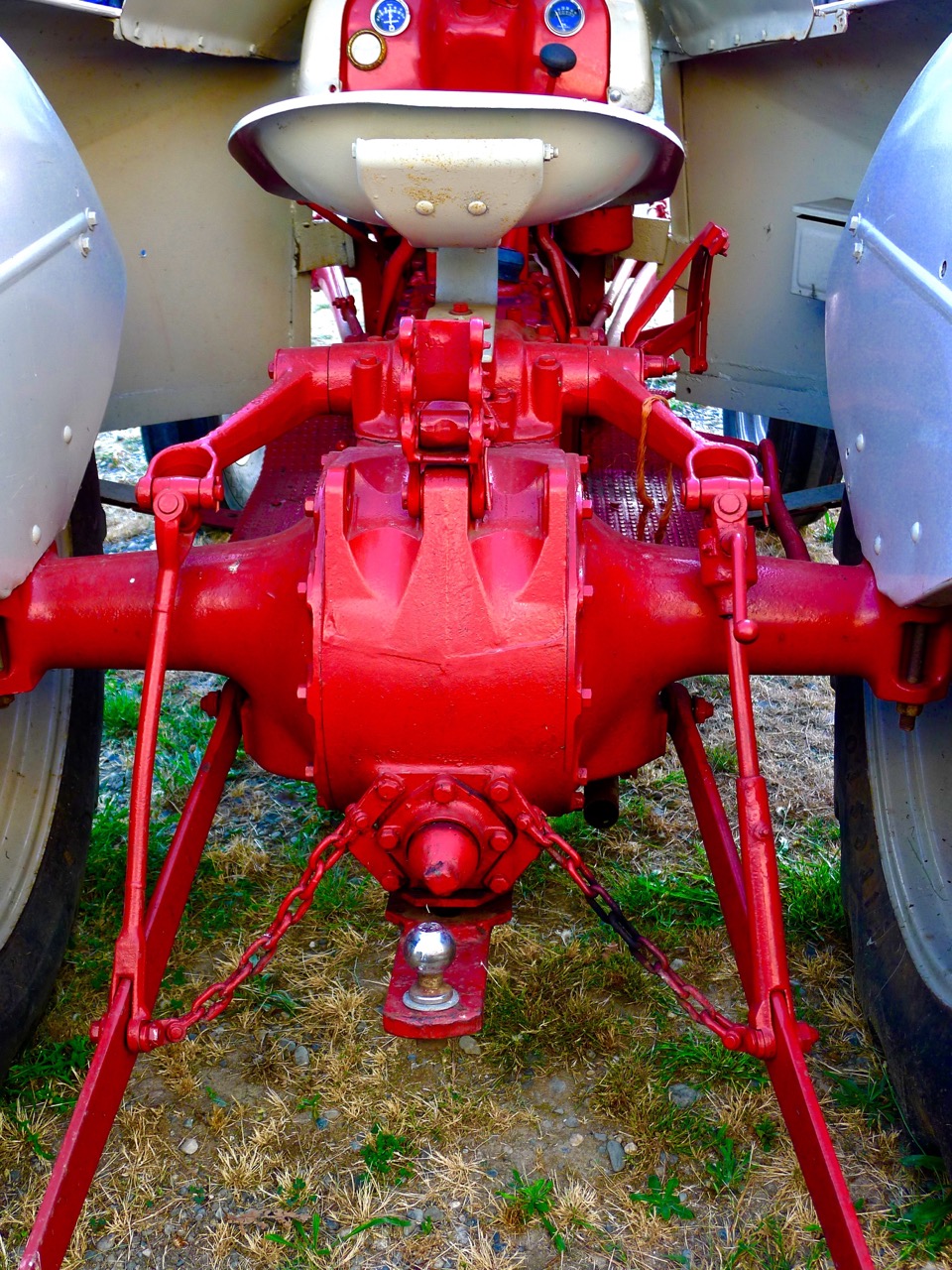
I have a real soft spot for the Ford 8N because the years I spent on one. For most things, we used our big diesel International, but I always used the Ford to run the side delivery rake. On occasion, we would use the John Deere, but I was never fond of it. It was the small MT with 2 cylinders and made a popping sound, thus the name Johnny Popper.
 
Last edited:
It is a Minneapolis Moline. It looks a lot like the 1929 model 27-42, but is smaller. We used to have a private museum with all the old tractors of the area. They were restored. The old steel wheels were common in the vast wheat fields of Eastern Washington. They could climb the steep hills and had enough front end weight to not flip over like the rubber tire models.

They use huge track tractors now with a lot of iron weight on front. They have air conditioned cabs and all the comforts one can imagine. I can imagine the old days and the dust those operators had to breathe, discing for winter wheat. One year, the dust raised by the farmers, collected in a cloud that went across the freeway, miles away, and caused a 37 vehicle accident.

I have a real soft spot for the Ford 8N because the years I spent on one. For most things, we used our big diesel International, but I always used the Ford to run the side delivery rake. On occasion, we would use the John Deere, but I was never fond of it. It was the small MT with 2 cylinders and made a popping sound, thus the name Johnny Popper.


I researched some of them and it looks like they made some fine quality tractors. My father growing up had to do all the plowing for grand daddy, with three mules and a plow; and my aunts said if he got even one row a little crooked, grand dad beat him to the ground with tobacco stalks. They were telling me this, when grandma was in hospital dying, she was 90, that's why your father was so hard on y'all, because of how hard he was raised. He plowed miles of fields, and ate lots of dust, unlike the comfort of the air conditioned cabs some get to use.

Bet that private museum with old tractors, was neat to see. The Ford tractors remind me of the Massey Ferguson, like the 1950 one I had, to me they look a like.


Allis Chalmers A.jpeg
 
I researched some of them and it looks like they made some fine quality tractors. My father growing up had to do all the plowing for grand daddy, with three mules and a plow; and my aunts said if he got even one row a little crooked, grand dad beat him to the ground with tobacco stalks. They were telling me this, when grandma was in hospital dying, she was 90, that's why your father was so hard on y'all, because of how hard he was raised. He plowed miles of fields, and ate lots of dust, unlike the comfort of the air conditioned cabs some get to use.

Bet that private museum with old tractors, was neat to see. The Ford tractors remind me of the Massey Ferguson, like the 1950 one I had, to me they look a like.


View attachment 921
Ford 9N was originally part of Ferguson, Ferguson Ford. It was Ford using the 3 point hitch made by Ferguson. The 8N was all Ford and they made their own 3 point hitch, patterned after the Ferguson. You may have heard of Massey-Harris Ferguson and eventually just Massey Ferguson.

 
Last edited:
Ford 9N was originally part of Ferguson, Ferguson Ford. It was Ford using the 3 point hitch made by Ferguson. The 8N was all Ford and they made their own 3 point hitch, patterned after the Ferguson. You may have heard of Massey-Harris Ferguson and eventually just Massey Ferguson.


That's why they favor so much; was wondering about it. Thanks for info, Faye you seem quite knowledgeable about tractors; as well as horses.


Last edited:
That's why they favor so much; was wondering about it. Thanks for info, Faye you seem quite knowledgeable about tractors; as well as horses.


Actually, I know less about horses than several others here. I do have extensive livestock, especially cattle, knowledge and also know tractors. I don't know why I have always loved old tractors, but did from a very young age. All kinds of tractors have been in my life of 75 years. Every year here around at fair time, we have an old farm restored equipment show. I always attend and love seeing all the old stuff fully restored.

I suppose it is a sickness, but no cure at my age. The thing is talking about all this, keeps my mind sharp and is a great dementia fighter. :cool:
 
Actually, I know less about horses than several others here. I do have extensive livestock, especially cattle, knowledge and also know tractors. I don't know why I have always loved old tractors, but did from a very young age. All kinds of tractors have been in my life of 75 years. Every year here around at fair time, we have an old farm restored equipment show. I always attend and love seeing all the old stuff fully restored.

I suppose it is a sickness, but no cure at my age. The thing is talking about all this, keeps my mind sharp and is a great dementia fighter. :cool:


Yeah they say use it or lose it; I think there's some "truth" in that. They have a parade for tractors here, every so often; Think it would be fun to do, and like you; I love seeing old tractors.
 
Here is a photo (not mine) so you can see what the tractor I learned to operate first, looked like. My first memories are of it are all faded and well used. It was a 1949 MT John Deere. It was made for row cropping with the tricycle front wheels and adjustable back wheels. It was the first JD with a touch-o-matic drawbar. 2 cylinder, 20 HP, with 4 speed unsynchronized transmission. No shifting on the move. You had to have it completely stopped. It had the foot pushed clutch, unlike some of the other bigger JD's in our family, that had hand clutches. It ran on gasoline. It stayed in my family until my father died.

OIP-1750096751.jpg

Photo, again not mine, of the same model and identical in every way, 1965 International 1206. It was a diesel 126 HP, 16 speed partial power shift, 6 cylinder two wheel drive. My dad bought it when we bought an additional 80 acres of alfalfa that was hilly. To raise top quality hay, we had to disc, reseed, and fertilize every year. Every other year, we plowed it with a 5 bottom turning plow. It took power to do all this on those hills, and the ability to shift on the go, was a big time saver. It usually took me 18 hours to plow it and another 14 or so to disc it, pulling tandem disc. We bought it almost new. I was just shy of 16 and what a dream not having to stop to shift. My dad seldom operated it, until I left home.

7kQycgFZwvdd.jpg
 
Last edited:
Here is a photo (not mine) so you can see what the tractor I learned to operate first, looked like. My first memories are of it are all faded and well used. It was a 1949 MT John Deere. It was made for row cropping with the tricycle front wheels and adjustable back wheels. It was the first JD with a touch-o-matic drawbar. 2 cylinder, 20 HP, with 4 speed unsynchronized transmission. No shifting on the move. You had to have it completely stopped. It had the foot pushed clutch, unlike some of the other bigger JD's in our family, that had hand clutches. It ran on gasoline. It stayed in my family until my father died.

View attachment 952

Photo, again not mine, of the same model and identical in every way, 1965 International 1206. It was a diesel 126 HP, 16 speed partial power shift, 6 cylinder two wheel drive. My dad bought it when we bought an additional 80 acres of alfalfa that was hilly. To raise top quality hay, we had to disc, reseed, and fertilize every year. Every other year, we plowed it with a 5 bottom turning plow. It took power to do all this on those hills, and the ability to shift on the go, was a big time saver. It usually took me 18 hours to plow it and another 14 or so to disc it, pulling tandem disc. We bought it almost new. I was just shy of 16 and what a dream not having to stop to shift. My dad seldom operated it, until I left home.

View attachment 954


Fine looking tractors, Faye; International makes great buses too, ours was a really tough bus, and dependable. My Kubota tractor is 16 speed, and I think shifting while moving is definitely better than the stop to shift. When you're 16 yo, shifting gears is "exciting". And working 14 or 16 hours, plowing or disc, you surely wouldn't want to be stopping to shift; prolonging the "job".

I keep looking at all these tractors and they make me "Think" like this "meme" below. 😁


1772327361616.png
 
I hate to point this out, being an old woman and all, but this story has a major flaw. At the first it says he disassembled the entire engine and had all the parts lying out in order, labeled, and cataloged. I have never heard of anyone tearing apart an engine and labeling the parts. :sneaky:

Later they say he never took off the oil pan, because it was sealed. ;) Can some of you more mechanical than me, explain how he got the rods, pistons, cam, valves, and crank shaft off with the oil pan attached? How did he bore the cylinders with the oil pan still attached? :cautious:

It was on a routine maintenance, years after getting it running, that he decided to disassemble the engine, down to the BARE block, not just a rebuild like he had done before. :ROFLMAO::ROFLMAO::ROFLMAO:

How did mice build a nest in a sealed transmission? :unsure:

The only reason the head would be cracked, is many old farmers just added water all spring, summer, and fall, diluting the anti freeze too much, so when winter came, if it wasn't drained, or anti freeze added, heads would crack. If it wasn't used in the winter, then draining was done. Since my 8N was used for snow removal, I had antifreeze in it year around. :cool:

Nice feel good story, but I am calling it pure bull pucky. :poop: Another thing is, I have never heard of a tractor being in that bad of condition or taking that long to restore. In 1970, my father in law bought a 1939 model B, Allis Chalmers that had a seized engine and he had it running in less than a week of spare time. :geek:

Not his, but identical. It is so ugly, it is cute!
134320_opt-782085721.jpg

Many old tractor restorations are mostly cleaning up and painting. With a seized engine, drop the oil pan, clean the engine bottom and the pan with kerosene, fill the spark plug holes with penetrating oil and let set for a week. The old tractors with hand cranks were great because that crank could be used to unseize the engine and work it until it was clean. Once free and clean, then use 10 weight oil for an hour, change the oil, and then put in 30 weight. ;)

Cleaning the fuel tank, lines, and rebuilding the carb, usually took longer than getting the engine unseized. New plugs, wires, rotor cap, points, condenser, and strobe timing didn't take that long even stopping for coffee and chocolate donuts. Usually, just a radiator flush and sealing any leaks, a lub change for the rear end and transmission, and wa la, those old tractors would run like a champ for years. :giggle:

Forget the paint, as my dad would say, that was prostituting a great old lady. Clean it up and maybe use a protective paint restoration wax, but to repaint it was a sin for many old time tractors buffs. :love:
 
Last edited:
I hate to point this out, being an old woman and all, but this story has a major flaw. At the first it says he disassembled the entire engine and had all the parts lying out in order, labeled, and cataloged. I have never heard of anyone tearing apart an engine and labeling the parts. :sneaky:

Later they say he never took off the oil pan, because it was sealed. ;) Can some of you more mechanical than me, explain how he got the rods, pistons, cam, valves, and crank shaft off with the oil pan attached? How did he bore the cylinders with the oil pan still attached? :cautious:

It was on a routine maintenance, years after getting it running, that he decided to disassemble the engine, down to the BARE block, not just a rebuild like he had done before. :ROFLMAO::ROFLMAO::ROFLMAO:

How did mice build a nest in a sealed transmission? :unsure:

The only reason the head would be cracked, is many old farmers just added water all spring, summer, and fall, diluting the anti freeze too much, so when winter came, if it wasn't drained, or anti freeze added, heads would crack. If it wasn't used in the winter, then draining was done. Since my 8N was used for snow removal, I had antifreeze in it year around. :cool:

Nice feel good story, but I am calling it pure bull pucky. :poop: Another thing is, I have never heard of a tractor being in that bad of condition or taking that long to restore. In 1970, my father in law bought a 1939 model B, Allis Chalmers that had a seized engine and he had it running in less than a week of spare time. :geek:

Not his, but identical. It is so ugly, it is cute!
View attachment 958

Many old tractor restorations are mostly cleaning up and painting. With a seized engine, drop the oil pan, clean the engine bottom and the pan with kerosene, fill the spark plug holes with penetrating oil and let set for a week. The old tractors with hand cranks were great because that crank could be used to unseize the engine and work it until it was clean. Once free and clean, then use 10 weight oil for an hour, change the oil, and then put in 30 weight. ;)

Cleaning the fuel tank, lines, and rebuilding the carb, usually took longer than getting the engine unseized. New plugs, wires, rotor cap, points, condenser, and strobe timing didn't take that long even stopping for coffee and chocolate donuts. Usually, just a radiator flush and sealing any leaks, a lub change for the rear end and transmission, and wa la, those old tractors would run like a champ for years. :giggle:

Forget the paint, as my dad would say, that was prostituting a great old lady. Clean it up and maybe use a protective paint restoration wax, but to repaint it was a sin for many old time tractors buffs. :love:


You are right about the AI video, he couldn't rebuild it without pulling the oil pan. Just saw it and since it was about a tractor thought I would put it here. That 1939 model B is a cute tractor. Mice are able to get in engines and build nests, but not so sure about a sealed tranny.
 
Back
Top