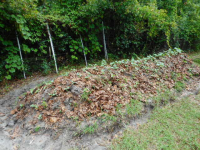
Hügelkultur is a type of gardening that uses rotting wood to strengthen the soil. Rather than hauling away wood debris, you create a mound of natural wood in various stages of decomposition and then cover it with several inches of soil.
Over time, fungi and moisture will turn that wood into a long-term, self-feeding sponge. Although it is not an ancient gardening method, it relies on natural ways of enriching the soil.
Branches break off a tree in the forest, saplings that are unable to compete for sunlight die off and fall to the ground, and trees topple. Every autumn, leaves fall to the ground, eventually covering wood debris, which composts over time to enrich the soil.
Hugelkultur is a stupid-looking term for a raised bed built over logs, branches, leaves, and other organic matter. Some of you may have used a form of this by adding wood and other compostable debris to fill the bottom of a raised bed to reduce the amount of soil you need to add, particularly when planting something shallow-rooted.
There are other advantages, however. As the wood breaks down, it releases nutrients, holds water, and creates a warm, living core inside the mound. You might think of it as a slow-motion compost pile that you can plant into right away.
Short-term advantages include moisture retention, warm soil, instant fertility, and the ability to use what you probably already have. Even in the first season, the buried wood acts like a sponge, reducing how much you need to water. Decomposition generates heat that is gentler than you would see from a compost pile, helping seeds germinate earlier and extending the growing season. Leaves, compost, and smaller twigs break down quickly, feeding shallow-rooted plants. Fallen branches, pruned limbs, and last year's garden waste become building material rather than fodder for the landfill.
Long-term advantages include fertility that can last for decades, as large logs break down slowly, releasing nutrients over years. As the rotting wood softens, it becomes sponge-like, allowing the bed to go long stretches without irrigation. Fungi, insects, and roots carve channels through the mound, making it airy and resilient. The mound may also moderate temperature swings and resist drought.
This method of gardening can be accomplished in a raised bed or created in a way that makes it a raised bed.
Typically, logs and branches form the foundation. Hardwoods last longest, while softwoods break down faster, so a mixture of the two can be advantageous. Adding larger pieces of wood in various stages of decomposition is also good.
On top of the base, add smaller sticks, leaves, grass clippings, and compost over the logs, and cap that with a layer of soil or finished compost to create a plantable surface. Six inches or more of soil is best, as much of it will fall down to fill the spaces between the wood.
Beds can be low and subtle or tall and dramatic; either will work.
In the first generation of planting, shallow-rooted annuals are best, while deep-rooted perennials will do very well as the bed matures.
As the soil settles and the smaller pieces of wood compost, you will probably have to add soil or finished compost between growing seasons.
Hugelkultur mimics what happens naturally on a forest floor. Fallen wood decays, fungi move in, moisture collects, and plants grow in the enriched soil above it. As a gardening method, hugelkultur speeds up the process and concentrates it in a place where you can use it.
Best of all, it's not a tight science. You don't even have to use the two dots above the "u."You can build it neatly or loosely, make it tall or make it low, use the perfect mixture of materials, or whatever you have on hand. The soil adapts, settles, and finds its own balance over time.
Over time, fungi and moisture will turn that wood into a long-term, self-feeding sponge. Although it is not an ancient gardening method, it relies on natural ways of enriching the soil.
Branches break off a tree in the forest, saplings that are unable to compete for sunlight die off and fall to the ground, and trees topple. Every autumn, leaves fall to the ground, eventually covering wood debris, which composts over time to enrich the soil.
Hugelkultur is a stupid-looking term for a raised bed built over logs, branches, leaves, and other organic matter. Some of you may have used a form of this by adding wood and other compostable debris to fill the bottom of a raised bed to reduce the amount of soil you need to add, particularly when planting something shallow-rooted.
There are other advantages, however. As the wood breaks down, it releases nutrients, holds water, and creates a warm, living core inside the mound. You might think of it as a slow-motion compost pile that you can plant into right away.
Short-term advantages include moisture retention, warm soil, instant fertility, and the ability to use what you probably already have. Even in the first season, the buried wood acts like a sponge, reducing how much you need to water. Decomposition generates heat that is gentler than you would see from a compost pile, helping seeds germinate earlier and extending the growing season. Leaves, compost, and smaller twigs break down quickly, feeding shallow-rooted plants. Fallen branches, pruned limbs, and last year's garden waste become building material rather than fodder for the landfill.
Long-term advantages include fertility that can last for decades, as large logs break down slowly, releasing nutrients over years. As the rotting wood softens, it becomes sponge-like, allowing the bed to go long stretches without irrigation. Fungi, insects, and roots carve channels through the mound, making it airy and resilient. The mound may also moderate temperature swings and resist drought.
This method of gardening can be accomplished in a raised bed or created in a way that makes it a raised bed.
Typically, logs and branches form the foundation. Hardwoods last longest, while softwoods break down faster, so a mixture of the two can be advantageous. Adding larger pieces of wood in various stages of decomposition is also good.
On top of the base, add smaller sticks, leaves, grass clippings, and compost over the logs, and cap that with a layer of soil or finished compost to create a plantable surface. Six inches or more of soil is best, as much of it will fall down to fill the spaces between the wood.
Beds can be low and subtle or tall and dramatic; either will work.
In the first generation of planting, shallow-rooted annuals are best, while deep-rooted perennials will do very well as the bed matures.
As the soil settles and the smaller pieces of wood compost, you will probably have to add soil or finished compost between growing seasons.
Hugelkultur mimics what happens naturally on a forest floor. Fallen wood decays, fungi move in, moisture collects, and plants grow in the enriched soil above it. As a gardening method, hugelkultur speeds up the process and concentrates it in a place where you can use it.
Best of all, it's not a tight science. You don't even have to use the two dots above the "u."You can build it neatly or loosely, make it tall or make it low, use the perfect mixture of materials, or whatever you have on hand. The soil adapts, settles, and finds its own balance over time.