Are You a Complainer?

Joe Riley

Well-known member
The difference between a complaining mode and an explaining mode

complaining-seagull-300x266.jpg
images


When I am bringing a product defect to someone's attention, or just answering a 'questionable' question, I tack on a caveat of sorts: "I am NOT complaining...I AM explaining!" How about YOU? Do you find yourself complaining more, as you grow older?
 
Last edited:
The difference between a complaining mode and an explaining mode

complaining-seagull-300x266.jpg


When I am bringing a product defect to someone's attention, or just answering a 'questionable' question, I tack on a caveat: "I am NOT complaining...I AM explaining!" How about YOU? Do you find yourself complaining more, as you grow older?
Dunno Joe.

Sometimes a complaint has to come with an explanation to justify the complaint unless of course you’re a man explaining your complaint to a woman who will accuse you of “mansplaining” thereby rendering any and all possibilities that his complaint was warranted to begin with.
Although, if a person merely said that “it’s so cold that I saw a politician with his hands in his own pockets”, one would naturally expect the complaint of being cold to be followed with a modifier and and a query of, “which politician”?

Same thing with praise. If you’re a person who does everything great, you’d want to know which great thing you did that the admirer is referring to.
On the other hand, if a person does nothing right, he doesn’t need an explanation of what the praise was for.

Now, do I personally complain? Yup but almost always produce a qualifier that explains why I’m upset. I’m a guy and that’s what guys do as opposed to most women who, when a husband asks his wife what’s wrong she will just hack up that “look” and say, “nothing(!!!)” which leaves said husband (whose first name has been changed to “Nothing”) to explain to himself why she’s ticked.

One other kind of complaining I do is to the only one who can fix it. He doesn’t need an explanation but I do it anyway in hopes that He sees it more from my prospective. Moses did it, Sarai did it as did a few other Biblical characters. They explained their point of view and He either went with it or didn’t.
I tried it yesterday. It was 14 degrees outside and whilst complaining about it I explained to God that I could do my work much better if it were about 70 degrees.
Since it only made it to 42 degrees, He obviously understood my complaint but my explanation just wasn’t good enough to warrant a temporary heat wave in the middle of December.
 
I suppose I do a bit of both. If I have reason to believe that my words might have a positive effect towards changing whatever it is that I am unhappy with, I might explain the problem. However, when I have every reason to believe that whoever is responsible for the problem couldn't care less about anything I have to say, I might still complain. This is why I might complain about Senator Susan Collins but no longer see any reason to contact her about any of it.
 
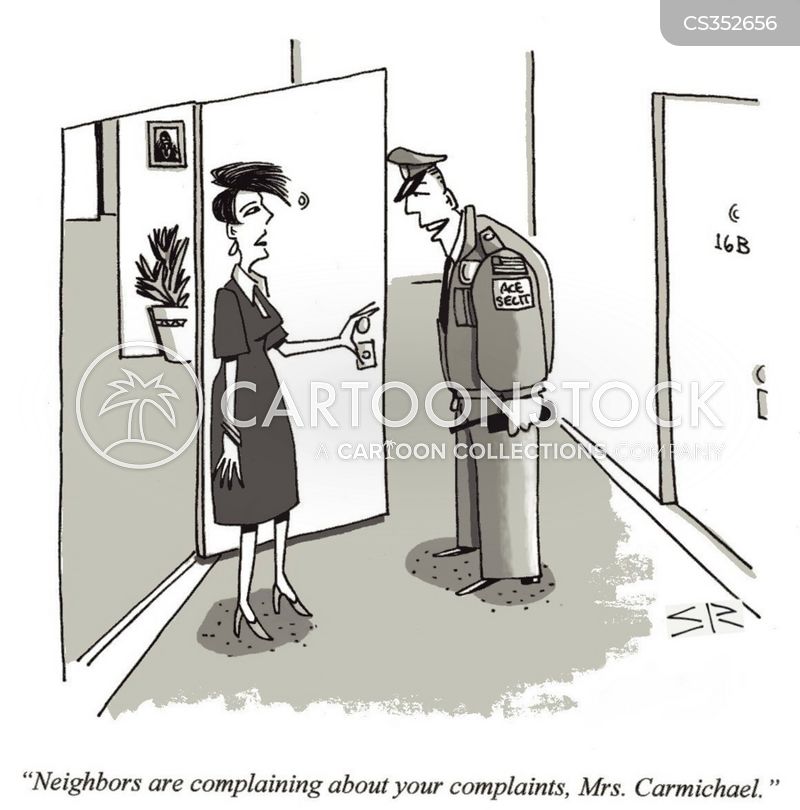
I guess in its worst form, it is possible to get addicted to the self righteous feeling that we get when we are "doing" something noble. It soon becomes a irrational habit that is reinforced at shorter intervals, over and over again. Over time, we begin to develop a mild Don Quixote complex, that in time morphs into the real thing. Some of us are content to remain Don Quixote's pragmatic squire, Sancho Panza. Or perhaps I am overthinking things and I just become annoying and attract complaints myself, like Mrs. Carmichael in post #7, above.:unsure:
 
Last edited:
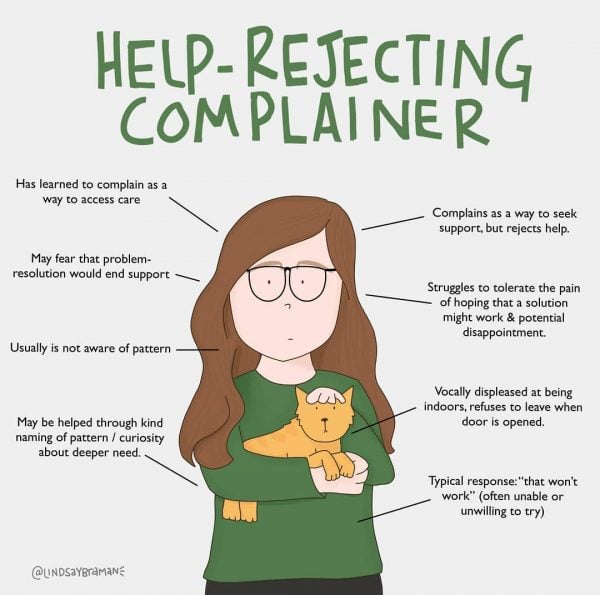
I asked AI about a complainer and explainer in a marriage?

AI REPLY:
"The dynamic between a "complainer" and an "explainer" (or a solution-oriented partner) is a common relationship pattern that often stems from different communication styles and unmet emotional needs. The key to managing this dynamic is shifting from a cycle of negativity to constructive communication."🤖

The Dynamic Explained
  • The Complainer (often seeking empathy): This partner typically voices grievances as a way to express feelings of being unheard, unappreciated, or stressed. They are often looking for validation and emotional support, not an immediate fix.
  • The Explainer (often problem-solving): This partner's natural instinct is to offer solutions or "play devil's advocate" to resolve the issue quickly. They may feel frustrated or helpless if their solutions are dismissed, not realizing their partner primarily needs a listener.
This difference can lead to a cycle where the complainer feels dismissed and the explainer feels like their partner is "always wanting more" or being a "victim".
 
Dunno Joe.

Sometimes a complaint has to come with an explanation to justify the complaint unless of course you’re a man explaining your complaint to a woman who will accuse you of “mansplaining” thereby rendering any and all possibilities that his complaint was warranted to begin with.
Although, if a person merely said that “it’s so cold that I saw a politician with his hands in his own pockets”, one would naturally expect the complaint of being cold to be followed with a modifier and and a query of, “which politician”?

Same thing with praise. If you’re a person who does everything great, you’d want to know which great thing you did that the admirer is referring to.
On the other hand, if a person does nothing right, he doesn’t need an explanation of what the praise was for.

Now, do I personally complain? Yup but almost always produce a qualifier that explains why I’m upset. I’m a guy and that’s what guys do as opposed to most women who, when a husband asks his wife what’s wrong she will just hack up that “look” and say, “nothing(!!!)” which leaves said husband (whose first name has been changed to “Nothing”) to explain to himself why she’s ticked.

One other kind of complaining I do is to the only one who can fix it. He doesn’t need an explanation but I do it anyway in hopes that He sees it more from my prospective. Moses did it, Sarai did it as did a few other Biblical characters. They explained their point of view and He either went with it or didn’t.
I tried it yesterday. It was 14 degrees outside and whilst complaining about it I explained to God that I could do my work much better if it were about 70 degrees.
Since it only made it to 42 degrees, He obviously understood my complaint but my explanation just wasn’t good enough to warrant a temporary heat wave in the middle of December.

This is because you men are mostly left brain,
 
I asked AI about a complainer and explainer in a marriage?

AI REPLY:
"The dynamic between a "complainer" and an "explainer" (or a solution-oriented partner) is a common relationship pattern that often stems from different communication styles and unmet emotional needs. The key to managing this dynamic is shifting from a cycle of negativity to constructive communication."🤖

The Dynamic Explained
  • The Complainer (often seeking empathy): This partner typically voices grievances as a way to express feelings of being unheard, unappreciated, or stressed. They are often looking for validation and emotional support, not an immediate fix.
  • The Explainer (often problem-solving): This partner's natural instinct is to offer solutions or "play devil's advocate" to resolve the issue quickly. They may feel frustrated or helpless if their solutions are dismissed, not realizing their partner primarily needs a listener.
This difference can lead to a cycle where the complainer feels dismissed and the explainer feels like their partner is "always wanting more" or being a "victim".

: This difference can lead to a cycle where the complainer feels dismissed and the explainer feels like their partner is "always wanting more" or being a "victim"."

This is what the man does when he has no other defense for his actions.


}
 
This is because you men are mostly left brain,
Uh-huh……Logic is primarily produced from the left side of the brain so if we guys lean more toward left brain thinking and logic is that somewhat enigmatic buffer between primitive action / reaction then most men would find a complaint without an explanation whether it is assumed or made verbally manifest to be likened to a puzzle with missing pieces.

It is in our nature to be the hunter and provider ergo the “puzzle” solver (logic) to wit the female nurturer attempts to thwart every day of her adult life.
i.e. Does this dress make my butt look larger?
This one question is not a question but is in all actuality a complaint because she already knows her posterior is large so attempting to explain it away by challenging the husband to validate her explanation as to why it looks like it could eclipse the sun is a direct challenge for the puzzle solver to think of a rationalization which, when dissected is a “rational lie”.

It’s either that or she just wants him to look at her rear end attribute looking for a complaint knowing that he won’t complain but will definitely look without explanation but instead, with admiration.
 
If you ever want peace and quiet in your life again, just say "Yes, Honey. You are so PHAT. Pretty Hot And Tempting."
And no sooner than I said it and having no chance to “explain” said statement as a compliment rather than a “complaint’, I seriously believe that I would wake up in the hospital after being in a 10 day or so coma due to massive head trauma.
 
Back
Top